
Electrical Service Upgrades
Capacity That Supports Modern Electrical Demand
Electrical Service Upgrades in Lansing for homes that trip breakers under normal use, properties preparing for EV charging, and electrical systems sized for 1960s appliance loads
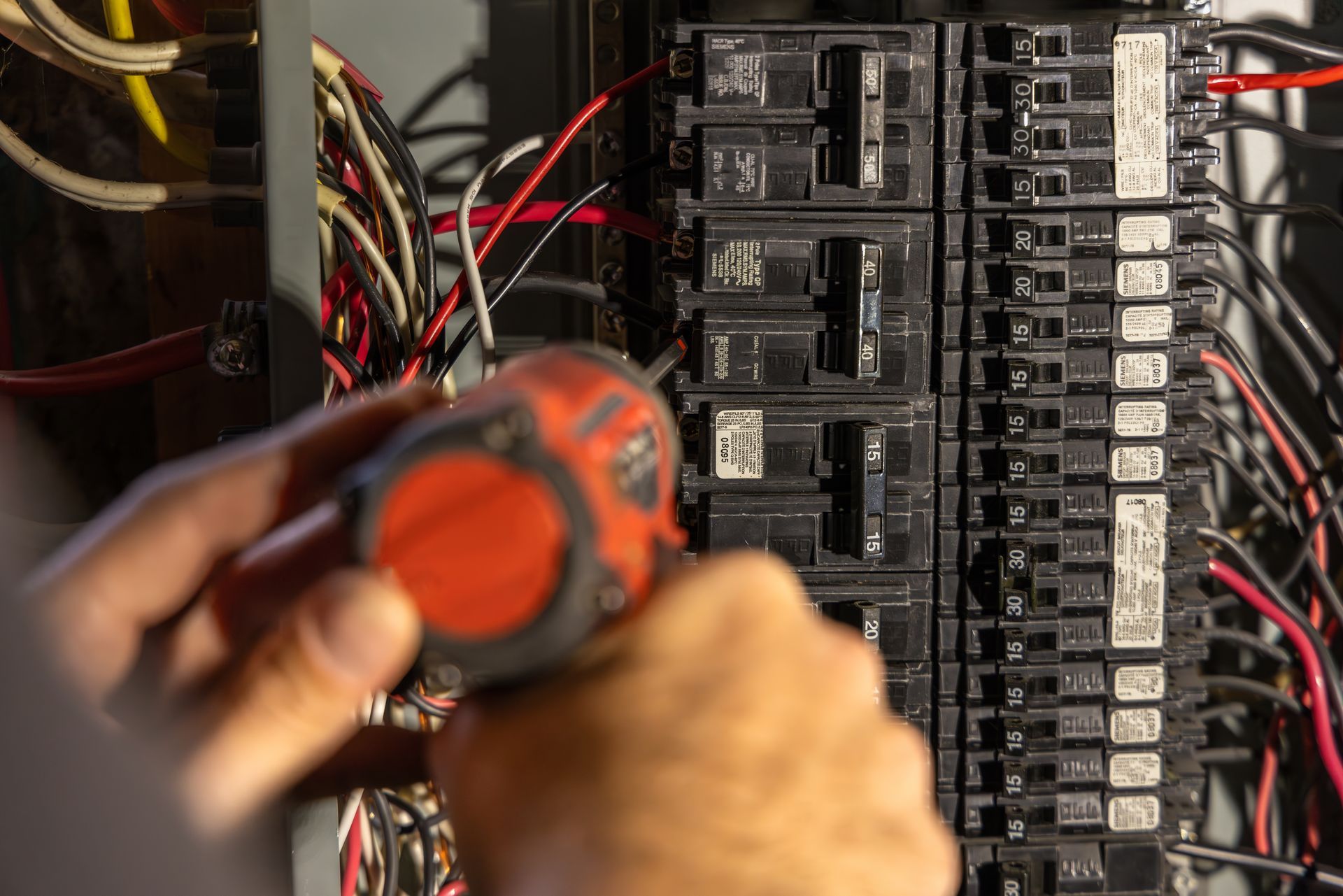
Homes built in the mid-20th century typically operate on 100-amp electrical service, which supported the lighting, refrigeration, and heating equipment of that period but struggles when asked to handle central air conditioning, electric vehicle chargers, modern kitchen appliances, and the continuous draw of computers, entertainment systems, and smart home devices. Sparky's Electric upgrades electrical service from 100-amp to 200-amp capacity in Lansing and Okemos when panels can no longer accommodate additional circuits, when breakers trip frequently despite proper sizing, or when new equipment exceeds available capacity. You need this service when adding a major appliance or EV charger is not possible without shedding other loads, when the panel has no open breaker slots, or when the meter base and service entrance conductors show deterioration.
The upgrade begins with evaluating total household load, identifying which circuits will remain and which will be consolidated or separated, and determining the appropriate service size to support current and anticipated demand. The electrician coordinates with the utility to disconnect service, installs a new meter base and service entrance conductors rated for 200 amps, replaces the panel with a modern load center that accommodates AFCI and GFCI breakers, and reconnects all circuits with proper labeling and wire management. The utility reconnects service and verifies metering once the installation is inspected and approved.
Request a load calculation and service evaluation to determine whether your current panel meets household electrical demand.
Why Electrical Capacity Needs Increase Over Time
Electrical demand has increased steadily as homes have added central air conditioning, electric ranges, tankless water heaters, and vehicle charging equipment. A 100-amp service provides 24,000 watts of available power at full capacity, but code limits continuous loads to 80 percent of that capacity, leaving approximately 19,200 watts. A central air conditioner draws 3,000 to 5,000 watts, an electric range uses up to 12,000 watts, and a Level 2 EV charger consumes 7,200 to 9,600 watts during charging. These loads alone approach or exceed available capacity before accounting for water heaters, lighting, and plug loads.
After the upgrade, the panel supports additional circuits without overloading, breakers no longer trip under typical use, and high-draw equipment operates simultaneously without shedding other loads. The new panel provides physical space for modern circuit breakers that include arc-fault and ground-fault protection, which were not available when older panels were installed. Sparky's Electric labels all circuits clearly and provides documentation of panel layout and breaker ratings for future reference.
The service includes replacing outdated or damaged service mast hardware, upgrading grounding and bonding to current code, and installing whole-house surge protection if the new panel supports it. Any aluminum service entrance conductors are transitioned properly to copper panel lugs using anti-oxidant compound and compression fittings rated for that application.
What Property Owners Ask About the Work
Service upgrades involve coordination with utility providers and substantial changes to how power enters and distributes through the home. These questions explain the process and what determines project scope.
How do you calculate whether a home needs a 200-amp service or if 100 amps is still adequate?
The electrician performs a load calculation based on square footage, heating and cooling equipment, major appliances, and anticipated future loads like EV chargers or home additions. The calculation follows NEC Article 220 to determine minimum service size, and the recommendation accounts for future capacity needs to avoid a second upgrade.
What coordination with the utility company is required for a service upgrade?
The utility must disconnect power at the meter before work begins and reconnect it after the installation is inspected and approved. The electrician schedules the disconnect, completes the upgrade while power is off, arranges the municipal electrical inspection, and coordinates reconnection once the installation passes inspection. The process typically spans several days depending on utility and inspection availability.
What happens to the existing electrical panel during an upgrade?
The old panel is removed and replaced with a new load center that meets current code requirements. All circuits are transferred to the new panel, and any circuits that are undersized, damaged, or no longer in use are evaluated for repair or removal. The new panel provides additional breaker slots for future circuits and accommodates modern breaker types that were not compatible with older panels.
How does upgrading to 200-amp service affect installation of an EV charger?
A 200-amp service provides sufficient capacity to install a dedicated 40- or 50-amp circuit for a Level 2 EV charger while maintaining capacity for all other household loads. The dedicated circuit is sized based on the charger's specifications and run from the new panel to the charger location, typically in the garage or on an exterior wall near the driveway.
What conditions might require additional work beyond replacing the panel and meter base?
If the service mast is damaged or does not meet height requirements for the utility connection, it may need replacement or extension. If the grounding electrode system is inadequate or corroded, it must be upgraded to meet current code. If the main service conductors from the utility to the meter base are aluminum and show signs of oxidation or strand damage, the utility may require replacement before reconnecting service.
Sparky's Electric also performs electrical service upgrades in Grand Ledge and Brighton. Contact Sparky's Electric to schedule a load analysis and determine whether your electrical service supports current and future demand.